Sunday, June 29, 2008

Various and Sundry

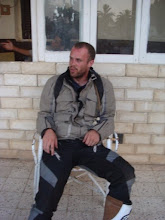
I now have my PhD. I defended last week. This person is mostly responsible for any success I've had. I am long in his debt.

I booked a flight from London to Manchester yesterday under Dr. Loewen. This, of course, is the principal reason I finished a PhD. Let's hope that I get an upgrade to business class and let's hope that no one has a heart attack.

Blogging will be light for the next little while as I head off to ride a motorcycle from Cairo to Cape Town before taking up at UBC in August. You can follow the trip here. If you are inspired by our trip you can take part by making a donation to Spread the Net, a great charity for which we've been fundraising . We've raised $15,000 so far and hope to raise $50,000 with the trip. You can donate here.

Monday, June 16, 2008

Potter Gold

Andrew Potter has a nice and counterintuitive column in this week's Maclean's. Potter argues that negative advertising may not be all bad. He has Warren Kinsella and me in his corner. I am not sure how I would match up in bar fight, but I suspect Warren's a good comrade in arms.

Anyways, it's an article I like, first because of the counterintuitions, but also because Potter cites some of my recent research. The paper is under review, so I won't link to it, but if you'd like a copy email me. In the meantime, here's the abstract:

Some citizens differ in their levels of concern for the supporters of various parties. I demonstrate how such concerns can motivate citizens to vote . I first present a simple formal model which incorporates concern for others and election benefits to explain the decision to vote. By predicting substantial turnout, this model overcomes the “paradox of participation”. I then verify the model empirically. I utilize a series dictator games in an online survey of more than 2000 Canadians to measure the concern of individuals for other partisans. I show how the preferences revealed in these games can predict the decision to vote in the face of several conventional controls. Taken together, the formal model and empirical results generate a more fulsome and satisfactory account of the decision to vote than an explanation which relies solely on duty.

Sunday, June 08, 2008

Small pleasures, Vancouver edition

I am sitting in the lounge at Pearson about to hop on the early flight back to North Bay. I flew the red eye from Vancouver.
I am just coming back from the annual meeting of the Canadian Political Science Association. It was a great time. I stayed with Daniel's" family in Vancouver and we spent a good bit of time checking out the city. I look forward to moving there in September. Indeed, I checked out Green and it looks quite agreeable. And I finished up the visit with dinner at Kits beach with the Cynic in Chief.
As importantly, we held our workshop on experimentation and it was a smashing success. I cannot really say I ever read a representative sample of the work read at the CPSA. A lot of it doesn't interest me to begin with and a lot which does seems a bit old. Experimentation is another story, so I was thrilled to spend a day listening to people talk about their projects and then to hear great academics discuss the work. We finished off with a big dinner at Daniel's house after which James Fowler gave a great talk on genetics and politics. Small pleasures, all.

Friday, May 30, 2008

Of Love and Curling

Speaking of great English Canadian music, I think the Weakerthans must be the most clever band in English Canada. I was very taken earlier this spring by "Virtue the Cat Explains Her Depature." I thought it so creatively captured how a cat would think if cats thought like humans (that is to say, as we think they think). Now I am entirely taken by Tournament of Hearts, which is available on their myspace page. The song develops several curling metaphors to describe a man's inability to commit to a woman, culminating in the great chorus:

"Why, why can't I draw right up to what I want to say?"
"Why can't I ever stop where I want to stay?"
I slide right through the day, I'm always throwing hack weight

I've never thrown a stone, but I can still relate. Give it a listen.

So it can't carry on a conversation....

One has to wonder if the Toronto Star thinks that this machine deserves to be stuck in a hole just because it's not good dinner company. The headline says it all, really. Elitists... If it's so boring why did they even write the story?

Wednesday, May 28, 2008

What's the best album in (English) Canada?

My friend and occasional teacher Charles Blattberg finds it contemptuous how readily English-speaking Canadians will declare something they like to be "the best in Canada" or "Canadian". His basic argument is an elegant one: most of what we refer to as Canadian is in fact English Canadian. So, Sounds Like Canada should be Sounds Like English Canada, etc.

This objection is rooted in Charles' belief that there is an English Canadian nationalism which should be celebrated but should not be held up as definitively Canadian. I don't agree with all aspects of his argument. But it's an argument he makes consistently and passionately and it's well-worth consideration and conversation.

My objections aside, Charles is entirely right about one thing. The Polaris Music Prize should not call itself the prize for the best album in Canada when it has a jury which is probably completely unaware of French music in Quebec and elsewhere and would certainly have no chance of identifying a worthy album recorded in any of the dozens of native languages spoken in Canada. It's ok to choose the best album in English Canada. Just don't say that you're choosing for the whole country when you're manifestly unable to do so.

If you think the Polaris Prize should either change its name or get a more, ahem, Canadian jury, you can write Steve Jordan at steve@polarismusicprize.ca. You can also get his publicists at joanne@indoorrecess.com and/or elanar@sympatico.ca.

Friday, May 16, 2008

Small pleasures, pt 3

In the third post in a continuing though quite intermittent series, I note three new small pleasures:

i) Old Man Luedecke's new album. Chris Luedecke is one of the most creative and original songwriters in Canada today. Aside from his banjo playing -- which is completely anachronistic and thus great -- he's really something of a lyrical master. On his first album he somehow weaved together a story of visiting the Fairview mall and a Footlocker salesmen with the tale of Sodom and Gomorrah, not to mention the heartbreaking bridge in Little Stream of Whiskey. On his new album, Proof of Love, he captures in one line on Send My Troubles Away a great truth: Well, you never know the good in you's been found. As I set to set out for Africa and then to Vancouver, I am reminded by that line alone that we cannot really know when and from where good things are going to come.
ii) The breeze off of Lake Nipissing. It makes long days in the garage pleasurable.
iii) And most importantly, taking the training wheels off my nephew's bike, watching him peddle in a circle in the garage, and then riding all the way down to Champlain Park and back with him, little legs like pistons and a smile as big as the lake.

Thursday, May 15, 2008

Make a carbon task costly

There's been much to and fro about Dion's proposal for a carbon tax. Look for it and you'll find it, if you wish.

Here's his idea in a nutshell: he's going to tax heating oil and other carbon emission sources, but not gasoline. Then he's going to cut your income tax. The whole thing is going to be a shift of $15 billion of so.

Here's the consequence: basically no one likes the idea and even less people believe that the tax shift is going to be neutral.

Here's what he should do: propose a carbon tax which is actually going to cost people more if they drive. This would be more effective, more honest, and more believable. And, believe it or not, there's a segment of the population (somewhere between 30% and 40%) who are more likely to support a policy when they are aware that it will cost them something.

I was lucky enough to run some survey experiments on a carbon tax for my dissertation. I may write about them in more detail at some point, or I may continue to embargo the results while they're under review. Either way, two facts stand out: a sizeable amount of the population is willing to pay more in taxes in exchange for a carbon tax. And a sizable portion is also more likely to support the policy when they think it will cost them something.

Herle sees rationality where others see luck

Danistan won't do it, so it falls to me. David Herle has quite the piece in the Toronto Star today. Excerpted from his May piece in Policy Options, Herle lays out a strategy by which Stephane Dion can win the next election. It's a rather simple prescription: first, point out that the Conservatives are far to the right of most Canadians; second, highlight Dion's strength as a different type of leader; third, play up the environment.

I want to leave aside discussion of whether these presumptions are even correct. I suspect at least one of them is wrong, but I've never been asked to run a campaign, so what do I know. I do want to highlight a rather ridiculous paragraph halfway through the article. In justifying his claim that Dion should emphasize his different qualities, Herle argues that Dion won the party leadership because:

Liberals wanted, and sensed that Canadians wanted, something different. They sensed that politics in Canada was ready for a new national challenge, something that transcended the machinations of Ottawa politics. In addition to his passion for the environment, Liberals saw in Dion a man of character and an anti-politician as an antidote to the current mode of our politics. After the sponsorship affair, Canadians needed to believe that the Liberal party was about purpose, not jockeying for partisan advantage.


This is ridiculous. This suggests that delegates calculated, once confronted with the binary choice between Dion and Ignatieff, that Dion was somehow the best man for the job all along. He was a new kind of leader and just what the country ordered. If delegates were so rational at the time, then why did less than one-in-five plump for him in the first place? It is simply not true that delegates selected Dion because he was the best choice of all candidates. No, they selected him because he lucked onto a final ballot in which his opponent was very controversial and far outside the mainstream of his party on three key issues: Quebec, fiscal imbalance, and Afghanistan.

I've written in the past of my admiration for Dion and it abides. But admiration shouldn't ignore the facts. Make no mistake: David Herle is very smart. He is probably one of the sharpest political minds in Canada. But I am left to wonder whether reading rationality and brilliance into luck hasn't impaired his judgment, now and in the past.

Thursday, May 01, 2008

Is walking worse for greenhouse gases than driving?

It appears it could be depending on how you get your calories.

These posts at Freakonomics, pointing to a long post calculating the impact of walking versus driving goes some way to turning conventional wisdom on its head. Here's the story: walking requires energy. The fuel for this energy is food. The amount of food required to replenish the calories burnt walking can require more energy and produce more externalities than driving.

I love economics because of its ability to confound conventional wisdom. And no where, perhaps, does conventional wisdom need more confounding than in confronting the very real challenges of climate change.

Thursday, April 10, 2008

On the Line

David Myles' new album, On the Line, is to be released in three short weeks. I am sure it's going to be a killer. You can check out a few tracks in advance here.

Bastarache retires

Wayne MacKay is the sensible choice. Let's keep our fingers crossed.

Monday, April 07, 2008

Rent-seeking bloodsuckers

As some of my friends and occassional dinner companions have found out, I don't have the world's most positive view of farmers. Generally, it's a bit of a show, but I do think the evidence is more or less clear that consumers -- especially the poor -- are not well-served by supply management and by the readiness of our politicians to give to farmers subsidies which they do not give to other industries. So, the argument is a bit of put-on because I like being contrarian, and a bit true, because I think the facts are with me. All of that aside, you can be sure I will pull out this article the next time the debate comes up.

It takes no foresight to guess that tobacco demand is going to continue to decline. And it takes no small amount of gumption to complain that "high taxation and anti-smoking policies have had the effect of expropriating their livelihood without compensation." No, all it takes is some incredible romantic sense that one is entitled to compensation because they work in a field as opposed to an office. Never has the term rent-seeking bloodsuckers come so easily to mind.

The Prime Minister, Auschwitz, and Allan Woods Absurd Article

This is an absurd article. Woods never comes out and says it, but he somehow thinks it's wrong that the Prime Minister didn't say anything to reporters after visiting Auschwitz. Instead of giving a speech afterwards, Harper signed a rather eloquent message in a guestbook. As Woods, our intrepid scribe puts it:

That statement was the only clue Canadians have as to what was in Harper's mind as he bore witness to the depravity of Auschwitz, where upward of one million Jews were exterminated, along with more than 100,000 Poles, Gypsies and homosexuals.


What, pray tell, do you think he was thinking? I am guessing, like any human being, that he was overwhelmed by what he saw (indeed, other reports capture his emotional struggle) and wasn't too keen on trying to discuss awful feelings in front of other people. Particularly not someone like Woods. Given the amount of space he's wasted writing on what the Prime Minister didn't say, can you imagine the knots he'd tie if he had said anything?

Woods should take a second to think about whether he is professionally obliged to be critical at every possible opportunity. And then he should do us the favour of not writing about it. No one, I can assure him, will write an article about his silence.

Saturday, April 05, 2008

A question/annoyance

Can someone explain to me how the interests of science are served by journals asking all authors to conform to some meaningless and arbitrary document standard for the purposes of review? Why, pray tell, must articles be submitted in 12-point Times New Roman? And why must they be ragged right? And why, for the love of all good and holy, must they be submitted in Word? What about those of us who actually care about offending the eyes of others, have seen the light, and have moved to Latex?

In short, why are authors made to conform to silly and arbitrary standards prior to acceptance and publication, especially when every author already has sufficient incentives to present their work in a clear and professional manner. Sheesh.

UPDATE: As Varnson notes in the comments, it is almost certain that no journal actually uses Word when it comes to setting the journal. Rather, they probably use a typesetting program like latex. You know, the type you're not allowed to submit in in the first place. Sheesh.

Thursday, April 03, 2008

Tom Lukiski on Tape

Tom Lukiski is in a world of trouble. The Tory MP was videotaped, seventeen years ago, making extremely disparaging remarks about homosexuals. These comments resurfaced when the NDP opposition in Saskatchewan found the tape in their new opposition offices.

The remarks are vulgar, ignorant, and delivered in a manner which suggests that they did not just come to the top of his head spontaneously and fully-formed. No, he has the swagger of someone who said similar things, several times, probably always to great effect.

Lukiski has issued an apology which includes the claim "They do not reflect the type of person I am. I do not believe in those types of comments."

Whether or not Lukiski is the type of person who still believes this things is precisely the point, I think. Not whether he used to believe those things. I want to phrase this as precisely as possible: the average man, certainly of Lukiski's vintage, viewed homosexuality and homosexuals much differently than most men today do. Much progress has been made towards greater and deserved tolerance in the last 17 years. In fact, I think we can say a near sea-change of opinion has occurred since broad public discussion over same-sex marriage began in earnest in the last four or five years.

I think this is much to the credit of people of a certain age who grew up with views which were ignorant and wrongheaded but widely-held and believed. If we want to make progress towards greater toleration, then we have to be willing to give people the benefit of the doubt and not to play politics with past intolerance.

So, the important question is this: Does Mr Lukiski still hold these views? And, if not, when did he change them? What was the moment at which he cast them aside as useless, incorrect, and uncivil. Maybe he can't define an exact moment, but he could at least try to explain his progression. Provided he does, the matter should be put aside.

I am open to opinions on this, having given my own.

Monday, March 31, 2008

Why Bob Rae's Entry into Parliament Secures Dion's Leadership

There's been some to and froing here and there about whether Rae's entry into Parliament makes Dion's (apparent) leadership woes better or worse. I think the case is pretty clear that things have become better for Dion.

Let's assume five things:

i) Bob Rae would like to be leader as soon as possible.
ii) Michael Ignatieff would like to be leader as soon as possible.
iii) If Dion loses the next election he will be forced out by multiple players.
iv) If Dion is to be forced out before the next election, it will require a much stronger effort then that mounted by one party vice-president, one student council type, and one obscure MP.
v) Such an effort would clearly point to an actively organizing candidate, on the scale of Mulroney contra Clark in 1983, Martin contra Chretien post 2000, or Chretien contra Turner in 1986. A candidate would pay a cost for this.

If you take these as reaonable assumptions, then I think you can back out logically why Dion is now more secure. First, suppose that Ignatieff really puts a push on Dion (which he has not been doing thus far, by my lights). He could perhaps force Dion out, but he too would pay a price for the coup, and this would likely facilitate Rae's rise. Similarly, Rae is now closer to the leadership than he's ever been. But were he to force out Dion, then he would only enable Ignatieff's rise, as he would carry the blame.

Both Rae and Ignatieff, then, would rather wait until after an election (presuming Dion loses) and try their odds in another head-to-head. To make any other move would be to ensure the other's rise.

There is something to this Team of Rivals stuff.

Elections in Zimbabwe

If the logic of political survival sometimes beats one about the head, it also sometimes allows events like this. Zimbabwe is on the cusp of closing a chapter in its history, unquestionably a dark one. If you're inclined, say a prayer that corruption will not win out. If you're not inclined, then just hope. And get ready to share in the joy of Zimbabweans who may be soon rid of Mugabe, that great lost hope.

Friday, March 28, 2008

Choose a Day to Spread the Net


Over at Cairo to the Cape we are selling days of our trip. The idea is simple. If you donate $150 to Spread the Net then we'll designate one day of our trip to you. After the trip is done we'll write up a report of the day for you, include some pictures, and perhaps our maps from that day, or some other momento.

For what it's worth, the day when we ride the pictured road is still available. It's in Northern Kenya. It's going to be so great!

Thursday, March 20, 2008

Leo the Lion

One can only imagine this occurred immediately after the cat realized how redundant is its name.

Byelections and Turnout

A point to begin with: we basically know very little about byelections in Canada. If you'd like to see how confused is our common wisdom about what byelections tell us you should read this post at Megapundit. We do not know definitively whether the government is systematically punished in byelections. We don't know when turnout in byelections will be higher or lower than average. And we don't know if byelection winners do better or worse than equivalent candidates in the subsequent elections. It is one of many empirical blind spots in Canadian politics. Fred Bastien and I are trying to shed some light on it in a paper in progress, but I still have no idea about the answer to these questions.

All of that said, I am rather confident that new voter ID laws have absolutely nothing to do with the apparently no turnout in Monday's four federal byelections. First, it is completely unlikely that large numbers of voters knew about these new restrictions and thus abstained from voting. Knowledge sufficient to understand the restrictions would also be sufficient to understand what forms of ID could be used in their place. So it's difficult to believe that new restrictions were anything but a post hoc explanation for some people who stayed home. Second, while there are some stories of people being turned away at the polls, there was clearly not enough of this to drive the decline. If, say, 10% of voters in a riding where refused the right to vote you can be sure you'd have news stories with more definitive sentences than "He's (Charlie Angus) also heard of at least one student being turned away in Vancouver Quadra because of the residency identification rules."

Turnout was quite low in Saskatchewan. In fact, in the 41 byelections since 1990, only five had lower turnout. Then again, turnout in the same riding was six points below the national average in 2006, despite the race being extremely close. The likely culprit of this low turnout is rather obvious, I think: first, byelections never have high turnout because of a lack of attention and interest. Second, turnout is declining everywhere, so we should expect to see it declining in byelections as well. Combined, we should expect lower turnout in byelections going forward.

The bottom line: we certainly don't know that low turnout was the result of new voter identification rules. Making hay with Elections Canada over it is probably a little off the mark.

Saturday, March 08, 2008

Thank you for smoking....

I just watched Thank You For Smoking (dissertation be damned) and then read this article on Barrack Obama's dirty habit. It's rather funny. And the movie is just great.

Thank you for smoking....

I just watched Thank You For Smoking (dissertation be damned) and then read this article on Barrack Obama's dirty habit. It's rather funny. And the movie is just great.

Thursday, March 06, 2008

Rename Metro Lionel-Groulx Metro Oscar-Peterson

Agreed. And while we're at it perhaps we could rename my building at the UdeM which is also named after the anti-semite priest himself.

Wednesday, March 05, 2008

More Voter Turnout

There's a short CBC piece on my radio bit here, as well as audio here (for those of you wishing to hear the definition of stammering). I'll post the Herald editorial when it comes across the wire.

UPDATE: Here is the Herald piece. The piece references an experiment I conducted with Henry Milner and Bruce Hicks published first as a working paper by the IRPP and then as a research note in the CJPS.

Voter Turnout and the Alberta Election

I am doing a few short interviews on the CBC morning shows in Calgary and Edmonton tomorrow. The topic, as I understand it, is the record low turnout in the Alberta election last Monday. And, if I have my way, about why this really doesn't matter all that much for the legitimacy of the government. Tune in if you get the chance.

Saturday, March 01, 2008

After the long drive – Olympic Symphonium at Casa de Popolo


The boys from The Olympic Symphonium rolled into Montréal on Thursday night to play at Casa de Popolo. Road-weary and pensive, they put on a great set between Tyler Messick’s loud and layered pop and the whimsical and eclectic Share.

The Olympic Symphonium is a trio of prolific maritime players: Kyle Cunjak and Nick Cobham (both of whom also play in Share), and Graeme Walker (of Grand Theft Bus). More a project than a band, each member writes their own tunes and then arranges them with the other players. The visual effect is a game of musical chairs with players trading off instruments and lead vocal between each song, and the remaining two members offering up a mix of whistles, harmonies and backing parts. The sonic result is some cross between Bonnie Prince Billy, Calexico, and doo-wop, all at a whisper.

The OS played a mix of songs off their first album, songs off their upcoming album, and a great cover of “No More Workhorse Blues.” There can be little criticism of this trio’s musicianship. They play sparingly and thoughtfully, and the sound is a sum a little greater than its parts. They do not excite but they do calm and impress. I can’t say that the crowd was totally taken by the act. Their set instead seemed like something of a quiet interlude or respite. A break on the side of the road during a long frantic drive. But maybe that’s what they needed and we wanted.

(The great photo above is by Sarah Brideau. Check out her site for some great work.)


Monday, February 25, 2008

The Impala is a Very Popular Automobile: On the Misunderstood Pleasures of Canoeing

Below is a shortened version of an essay I wrote up after Sam, his father, and our friend Maskull paddled the lower Rupert River last summer. It's cross-posted at Cairo to the Cape.

Our plan was simple. Sam’s father, Dave, would fly in from Vancouver on Tuesday night. I would arrive in Ottawa the next morning. Dave, Maskull and I would spend the day collecting supplies, two canoes, and a rental car. We’d leave Ottawa the next morning for the Rupert River, 900 kilometres north, where we’d take four days to paddle to Rupert Bay and then drive home.

It is a rather delicate matter to rent a car when one intends to strap two canoes to its roof without a proper rack, drive far into Northern Quebec, and then leave the car unattended for four days. First, no car is ideally suited for this. Second, no car rental agency wants to give you a car upon which you are going to mount two canoes. We booked a Chevy Impala, an incredibly pedestrian but flat-roofed car ideal for two canoes. We resolved to say nothing of our intention to load canoes atop the car.

Our first problem was that the agency had no Impalas. Our second was that they did not understand why we were refusing an upgrade to a Grand Prix. Standing at the rental desk, Dave and I pondered over the available cars, compared their virtues in a whispered exchange, and then asked when an Impala might be back. Clearly befuddled by our insistence, the clerk offered up that “The Impala is a very popular automobile. I can understand why you would want it.” The screwed-up skin between her eyebrows suggested she did not understand a thing. Hers was not a look of incredulity but bewilderment. We took a Grand Prix.

All rigged up on the James Bay Highway.


***

The Rupert neither winds nor meanders. It runs a wide line 600 km from Lake Mistassini to Waskaganish, the old Fort Rupert on Rupert Bay, at the bottom of the James Bay. In low season, the river flows at 11,000 cubic feet per second. In high season, it flows at six times the rate and drains more than 40,000 square kilometres. It runs between high banks of scraggly spruce and pine. There is rarely a spot even to pull up a canoe, except those cleared by the Cree who travel this ancient highway.

The Rupert does not “flood its banks” or roar unceasingly down a canyon. Instead, it widens out into lakes for much of its length. The only crashing and running is through a series of narrow passes like the Oatmeal Rapids, a kilometre-long, spine-shattering collection of cascades. It alternates between slow water and probable death.


The bottom of the Oatmeal Rapids. Seen from the James Bay Highway.

The James Bay Highway crosses the river 225 kilometres north of Matagami, itself some 670 kilometres north of Ottawa. The journey begins in the bubbling water at the bottom of the Oatmeal Rapids, where the water spills into a bay and then takes a right turn towards White Beaver Rapids. It is just one hundred kilometres from here to the Bay, but one must still portage seven sets of rapids through muddy trails, alder stands, muskeg, and a moose pond. Or, one has to choose a line, steel nerves and spine, and then shoot the white water. We would do both, at great cost and joy.

***

Our first morning was glorious and cold. We put on extra layers, boiled water for oatmeal and coffee, discussed the day’s challenge and looked over maps. We set out and soon met near disaster.

Landing at the top of the first of the White Beaver rapids, we could not find a portage. Instead, we lugged canoes and gear through thick bush, taking more than an hour to travel less than a quarter mile. We dreaded the mile-long portages ahead, picturing them as day-long fights through the thicket.

Perhaps it was the difficulty of this first portage that compelled Dave and Maskull to run the second set of rapids. As Sam and I landed at the rapids’ head, they shot them. We soon saw a canoe overturned and pinned in a fall. Maskull and Dave stood astride their canoe in the running water. They were, somehow, holding their bags and keeping the canoe from folding over the rock.

The canoe was eventually freed; Maskull and Dave paddled a kinked canoe downstream in search of our food barrel. We were on the first day of a four-day trip, and we’d lost all of our fruit, our food barrel, our hatchet, and a few other sundries.

Sam and I warped our canoe through a rock garden around the rapids. When we met Dave and Maskull at the bottom they’d found the barrel in a bay at the bottom of the rapids. We all changed into the only dry clothes we had left, quickly ate something, and then set out. We still had to go some ninety kilometres to Waskaganish.

Camp in the morning

***

It is not true that the rest of the trip was easy. To the contrary, it involved terribly long portages over some tough ground. On the second day, having left the Cat Rapids late afternoon after a difficult portage, we could not find a camping spot until the Bear Rapids, eventually setting up camp in long grass on a landing in the dark. Where we had contemplated luck and the stars the night before, camped on island in the bay between the second and third of the Fours, on this night we would collapse immediately after dinner. We took no joy in the sound of the waterfall ahead or in the accomplishment of paddling thirty kilometres and portaging five.

The next morning we paddled swiftly to Plum Pudding rapids, two sets of long white water. You avoid the first set by paddling a two-kilometre long braid on the south side of the river. After a short portage, you arrive at the water between the two sets. With some courage and short memory, we chose to shoot the second set. This was our greatest triumph. For two minutes we were voyageurs.


Shooting the Second Set of Plum Pudding

Fifteen kilometres later we arrived at Smoky Hill rapids. The portage counts out more than 5000 paces. It was the most difficult and rewarding portage of the trip. Just thirty kilometres from the Bay, the Cree still use nets to catch white fish at landing the bottom of the Smoky Hill rapids, as they have for five hundred years or more. The also use the landing as a recreation area. We had our greatest night here, finishing our last bottle of wine and eating a terribly good chilli. The locals who watched me swim in the rapids from across the river were the first people we had seen in three days.

The next morning was our last on the river and we took our time. As the river approaches the Bay it widens out and braids around a number of reed islands. We ate in our boats, passing around the last of our bagels and sausage. The water here is not quite brackish, but the change in the landscape must be a result of the ebb and flow of the ocean from Rupert Bay. We had just three sets of rapids - all steep, shallow and rocky – to the bay. We ran them all and then paddled onto Waskaganish.


The camp at Smoky Hill Rapids

***

Formerly Rupert House or Fort Rupert, Waskaganish lies half-way up Rupert Bay, which itself lies at the bottom of James Bay. It was the first fur trading post and store for the Hudson’s Bay Company. The Rupert provided a logical route inland to Quebec, a territory hostile to the HBC in its early days. The town was indeed captured by the French at the end of the 17th century and would not return to the Company’s control until 1776. As the Rupert is a great river soon to be dammed, we thought it would be full of paddlers; we were but the fourth group to travel to Waskaganish that summer.

Waskaganish is the third Cree town that Sam and I have visited, and certainly the most vibrant. This vibrancy and activity had a certain irony about it. When we visited Nemaska a summer before – arriving in the dark on our motorcycles and leaving early the next morning – the town seemed dead. The entire town was celebrating a wedding on a sandy point at the other side of the town, so we only met those who stopped by our campsite to visit.

By contrast, Waskaganish seemed full of people, most of them shuffling towards the lodge overlooking the river. But this was on account of death. When soon learned that the previous Friday two teenagers had drowned on a boat trip from Moosenee. At the same time we landed in Waskaganish, Cree were traveling from the other villages and camps for the funeral.

Maskull and I had volunteered to hitchhike back to the highway to get the car. Under these circumstances we were glad to take our leave. Sam and Dave stayed behind to pack our gear and mill about.

When we returned, we decided we would drive back through the night to Ottawa. With the sun coming up along Route 117 and Chelsea seeming like the calmest place on earth, we returned entirely fatigued and satisfied. We were soon to take our individual departures after dividing up the river maps and sorting out gear.


Arriving in Waskaganish

***

It was not long before I returned to my routine in Montreal. It was the same for Dave, Sam, and Maskull, I think. We exchanged emails in the days that followed, sent around pictures, and tried to put to words the joy of the outdoors and the pleasure of this trip.

I would spend the next weeks trying to explain this joy and pleasure to anyone who asked about our trip. How I relished loading up two bags and a barrel and heading into the bush. How I wanted to run more white water. Even how I relished the well-earned cuts and bruises, and how I felt as though I lived more in the five minutes after Maskull and Dave’s dump then I did in a year of academic work and travel.

I think most asked to be polite, but at least some friends and colleagues asked because they wanted to understand this desire to return, to spend one more night sleeping outside, and to run Plum Pudding one more time. I do not think I could ever explain it fully, in a way that could unknot the skin between their eyes. Canoeing is indeed a very popular sport, and the Impala is indeed a very popular automobile.

Tuesday, February 19, 2008

With apologies to Will Paterson...

I note that Mount A is featured in this story and York is just filler. May it always be so.

Saturday, February 16, 2008

Spread the Net

We've announced over at cairotothecape that we'll be supporting Spread the Net on our trip. Please click through to learn about the cause and to donate if you are so inclined.

Tuesday, February 12, 2008

Cairo to the Cape

For those of you who don't know (hello three readers!), I am riding my motorcycle from Cairo to Cape Town this summer with my friend Sam. We have a site for the trip up here. Please visit often. It will likely get more action than this page in the coming months.

Monday, February 11, 2008

A Prediction

Hillary Clinton will win no more than 5 more primaries between now and the nominating convention.

Tuesday, February 05, 2008

Spector contra the RCMP

Wow. Norman Spector is throwing some serious bombs at the RCMP. This guy does not mess around.

Monday, February 04, 2008

Charles in Charts

Charles Franklin has some great graphs for Super Tuesday at Pollster.com. It's always fun (for guys like me) to think about how we can show data in an concise and accurate way, and especially in a manner which easily imparts a lot of information. Now, Franklin's charts have not quite reached the status of this, but they are still pretty awesome. Check out the page above and the associated work at Pollster. It's a great website.

Thursday, January 31, 2008

On Fundraising

Elections Canada has just released fourth-quarter financial returns for national political parties. The Conservatives have again outstripped the Liberal Party. The Cons raised just under $5 million from 44,000 contributors. This is an average contribution of something like $110. The Liberals, by contrast, raised just under $2 million from about 14,000 Canadians for an average contribution of $143.

The Conservative fundraising machine is still far superior to the Liberal's; they continue to raise more money in smaller donations. These small donations are the key to success in the post-C-24 world. As donors are quite limited in total annual giving, parties who can raise small amounts of money from regular donors are better off. They can return to these donors when in need rather than having to find altogether new donors. So, the Conservatives appear to maintain the advantage, both in total donations and in the average size of donations.

I should note, however, that it is not all bad for the Liberals. Indeed, comparing this quarter's returns with the previous three quarters suggests that they are getting their act together. In the first quarter of last year the party raised just half a million dollars. They increased that to $1.2 million in the second quarter but it dipped down to just $800,000 in the third quarter. So, their fourth quarter was a big improvement. As importantly, they are increasing the number of donors, from just 4300 in the first quarter to 13,618 this quarter. While they average donation per donor is going up (up 17% from Q1) the number of donations is going up faster (up 311% from Q1). This is the key figure and those slogging away in party headquarters should take some real pride in it.

The Liberal Party still has a long way to go in matching the fundraising capabilities of the Conservatives; an ability which is a result not of wealthy donors but an ability to engage partisans. But they are on the right path. Which is all the more reason for Harper to go to the polls soon.

Monday, January 28, 2008

Altruism and Partisanship

For those who are interested, I've been working up a nice little paper on altruism and support for greater public spending (it is the last of my dissertation papers). The data are drawn from a poll of a few thousand people I was involved with last spring. And the measure of altruism is rather unconventional for a survey. Rather than ask individuals about whether they engage in altruistic acts or have an altruistic orientation, we observe their altruism. Specifically, we gave subjects some sum of expected money and then measured how they share it with an anonymous individual (in behavioural economics parlance this is the dictator game). A couple of results are of note, even though the paper is not ready. First, those who are altruistic are more likely to support greater public spending on public and semi-public goods, even when they are made aware that it comes at a cost to themselves in terms of higher taxes. This goes someway in confirming earlier findings which rely on stated rather than revealed altruism. And it goes some way in confronting the argument that people support public spending because they are self-interested and they want to benefit from programs at the cost of others. Second, and this is the more general finding I wanted to flag, I can find no relationship between partisanship and altruism. Tories, Liberals, and Dippers are, on average, equal in their altruism. What is interesting, though, is that their partisanship still matters for public spending, with Libs and Dips supporting greater public spending and Conservative identifiers supporting less. It's a bit of a puzzle I hope to resolve in the next couple of weeks. As always, thoughts are welcome.

Thursday, January 24, 2008

Brad Davis

Brad Davis has died, far too young.

A bright young lawyer, Brad worked as a volunteer on Michael Ignatieff's run for Etobicoke-Lakeshore and then became his director of policy on his leadership campaign. He then followed Ignatieff back to Ottawa before returning to Toronto and the practice of law. It was during Iggy's leadership campaign there that I came to know him. He coyly roped me into writing a memo on equalization (which soon led to a lot more memos). He was remarkably smart and a did a remarkable job marshalling together information and turning it into daring policy.

There is no shortage of words to describe Brad: hard-working, focussed, funny, witty, sarcastic, biting, incisive, determined, stubborn, brilliant. I give you everyone in the most complimentary sense. More importantly, Brad was a father who leaves behind a family. So say a prayer for them and for him, and then go out and do something good and that you believe in.

UPDATE: Jane Taber has a succinct and touching obituary on Brad