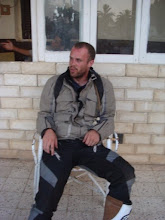
More importantly, a couple of friends are up to great things. My colleague at UCSD, Chris Dawes, was recently awarded the Peggy Quon Award for the PhD student most likely to contribute to the scientific study of politics. You'd never know that Dawes was a graduate student by looking at his publication record (e.g. Nature, PNAS, APSR, JOP, Economic Letters, QJE, PRQ) but it is true. He does wonderfully interesting research, so he's well deserving of the award. I should like to note that it's been won previously by very notable political scientists, including Jamie Druckman (the first winner) and my colleague Ben Nyblade.
Tuesday, July 07, 2009
Blowing my horn and others'
A touch of self-promotion and some recognition of a couple of friends. First, Andre Blais and I recently converted some of our research into a report for Elections Canada on youth electoral engagement. At the end, we recommended that, among other things, Elections Canada experiment with online registration and voting in a by-election. They appear to be going forward with this advice. It's nice when one's work has some influence!


Monday, July 06, 2009
Pearl versus Rubin on Causation
Sunday, July 05, 2009
Dave Batters, depression, and the toll of politics
Dave Batters, a former MP not yet 40, committed suicide last week. Batters had been an honourable member from 2004 until last fall when he announced he would not run again on account of his deep and debilitating anxiety and depression. He was overcome by this last week.
Stephen Harper gave a moving speech at his funeral yesterday. Bourrie presents it in full and speculates, quite reasonably, that Harper has probably struggled with the black dog as well.
We ask a lot of our politicians. We expect them to work hard for us, to fawn over us when we meet them, to live lives free of foibles, and to do all of this under the ignobility of assumed dishonesty and selfishness. It is a terrible burden. We should not be surprised that those lacking self-awareness and not lacking in ego are perhaps overrepresented in our hallowed chambers. But it should also not surprise us that politics often destroys people's lives.
I am not sure it did in the case of Batters, by the way. Quite the opposite, he is likely a testament to how individuals burdened with depression can still achieve greatness, and do so against obstacles more difficult than most can even begin to comprehend. It takes a special strength to struggle against the dark every morning and still make something of one's life. Batters' life, however short, is a testament to this. But also, quite sadly, to how far we have to go in understanding the pervasiveness of depression. Not to mention its treatment and the prevention of its more terrible ends.
At times like this, one hopes more than anything that Batters' family is fully acquainted with the admiration others held for their husband, son and brother.
Friday, July 03, 2009
Apparently, politics as usual...
...involves finishing jobs one was elected to do. It just keeps getting more silly in Wasilla.
Thursday, June 18, 2009
Air Canada and Great Customer Service
A quick plug for Air Canada. I fly a fair amount, probably a little more than average. And I am rather forgetful. Indeed, I think I got into academia because it is the only profession that rewards this. Anyways, a few weeks ago I had a series of 6 am flights, meaning that I was bleary-eyed and rundown when I was on the plane. On the second of these flights I left my favourite headphones in the seat back. My parents had bought me a great a noise-canceling set for Christmas that immeasurably improved traveling. I immediately called Air Canada and reported them lost. They said they had nothing on record, which lead me to think another customer was probably now enjoying them.
Today, I found the headphones in my mailbox. I note that Air Canada paid $11 postage to mail them to me express. This is great customer service. It is surpassed only by the time I left my iPod in the lounge at Pearson and someone at the desk searched for it, found it, and noted the next time I was flying. Boarding that flight, I was called over by someone at the desk to be reminded to pick it up when I landed in Toronto.
Air Canada is a great airline. It's worth noting.
Friday, May 15, 2009
Tuesday, May 05, 2009

Friday, April 24, 2009
Watching South Africa
South Africa had an election on Wednesday. We are less than a day away from receiving the final results. I've been following these with great interest, not for the least because this is a crucially important election for the country and the region.
Three things make this election so important. First, the presidency is likely to go to a man who will wish to change the constitution to his own ends. And we should be concerned about those ends. It was perhaps inevitable that Mbeki would look like a man in an oversized suit, dressed up and playing pretend, after following Mandela. But what a greater decline is marked by the election of Jacob Zuma. Leave aside his rough ways, his polygamy, and his demagoguery. He is a deeply corrupted man. He may be given to the most unhealthy impulses politically. And he has a past that he has not completely squared against the account of history. It likely includes ordering the torture and summary execution of comrades when he was head of the intelligence for the ANC. This is Guantanamo stuff and more. It should disqualify any man from leadership of a great and democratic nation.
The point should be belaboured. Here, in an article from The Times are some of the things which the Motsuenyane Commission claimed occurred under Zuma's watch.
Detainees were made to crawl through colonies of red ants with pig fat rubbed into their skin. A prisoner had his lips burned by cigarettes and his testicles squeezed with pliers; a detainee was buried up to his neck before being suffocated with a plastic bag; a woman had a guard masturbate over her because she refused to have sex with security officials. A trainee tried to commit suicide after his girlfriend was “taken away”. People were locked up in goods containers, in suffocating conditions. And people simply disappeared.
This election is important because it risks putting the constitution into the hands of a man responsible for such acts. Good democrats and liberals everywhere should hope that his party falls short of a two-thirds majority.
Second, the election is important because it marks the official arrival of COPE, a breakaway party from the ANC, and the confirmation of the Democratic Alliance as the largest opposition grouping in the country. The future of democratic politics in South Africa likely lies in a union between these two parties; between the moderate instincts of COPE and the principled and liberal positions of the DA. Such a coalition would also signal the triumph of non-racialized politics over the crude and unfortunately all-too-familiar chauvinism of the ANC under Zuma.
Third, the DA has won the Western Cape outright and will be able to govern without coalition partners. This is a beauty of federalism: an opposition party will have a jurisdiction in which to prove itself worthy of government. South Africa needs an effective opposition, so we should all hope that Helen Zille, the head of the DA and likely the next premier of the Western Cape, is able to govern effectively.
Saturday, March 07, 2009
You should wish for the days of Bob Rae

The Ontario NDP selected a new leader today. Andrea Horwath has been selected on the third ballot and after a speech in which she spoke out against "theives" and "scabs". I am not quite sure who these people are, but she is undoubtedly striking out a position on the left.
I don't know too many New Democrat activists, but I suspect most of them think that striking out a position on the left is the way forward. Indeed, I think Murray Campbell quite probably captures their thinking well when he notes that Howard Hampton "helped re-establish the party after its devastating defeat in the 1995 election." Of course, he did nothing of the sort.
I've posted a helpful graph. It shows the three-party seat share won by each provincial NDP leader in each election since WW2. It's instructive for two reasons. First, it shows how exceptional Rae's victory in 1995 was. The NDP should not be expecting that kind of performance any time soon. But, second, it also shows how exceptional Rae's average performance was, especially stacked against Hampton's. Contra Campbell and many others, Hampton would have done well to equal Rae's worst performance. And he never did. Horwath should hope for the same.
March 6
March 6th is among the most important days of any calendar year. This is a fact. Among the events of this day:
- In 1912, Roald Amusden returned from the South Pole to announce his successful expedition the prior December.
- Joseph Nicephore Niepce, the inventor of photography, was born in 1765.
- Townes Van Zandt, the great Texan songwriter -- listen to Colorado Girl if you wish to break your heart -- was born in 1944.
- Thomas Aquinas died on this day in 1274.
- And, Paul-Emile Victor, the French explorer who traversed Greenland in 1934, died on this day in 1995.
But, most importantly, it was the day Luke Smilek, my third nephew, was brought, kicking, screaming, and solving second-year calculus problems, into the world. Congratulations to my sister and beau frere, and hello Luke.
Friday, March 06, 2009
Various and Sundry, vN
Five random thoughts on a terribly nice day in San Diego:
2.) The voters actually are wrong sometimes. Just not this time. None of this is an indictment on John Tory's character. It's only to say that you only get so many chances in politics and his are up. So, what does Flaherty do?
3.) There is some talk of an election in Ottawa. This much is clear to me: the official opposition is within its rights and indeed its responsibilities to ask the federal government to account for all the stimulus money it spends, particularly the constituencies in which it is disbursed. For the government to force an election over this is to show contempt for parliamentary oversight. For the opposition to blink in the face of this is to show disregard for their duties. We all know how this should end. Let's hope it does, for once. Update: The jury is out.
4.) This is a wonderful blog post remembering a great man.
5.) I have been listening to a lot of Leo Kottke lately and trying to play half as well. I particularly recommend Everybody Lies, Buckaroo, and Julie's House. You'll be wiser and wryer.
Monday, March 02, 2009
David Myles...
...has won an ECMA for best folk recording for his album 'On the Line.' If you don't own it, you should. I've known David for a lot of years and among a really talented roster of friends he stands above the others.
Personally, I am quite glad this album's been recognized as it will long be associated with a great time in my life. David played at a party Sam and I held just before we left for Africa. And everytime I listened to music on the bike, I started with his track "I Don't Wanna Know." Even today, I can remember listening to the album as we dipped down into a pasture in Ethiopia and then into a line of trees where the fog was so thick we had to pull over and make sure we were still on the way to Addis.
So, buy his album and listen to it during something special and it will stay with you for a long time.
Thursday, February 19, 2009
Saturday, February 07, 2009
Death and All His Friends...
Couldn't make this better. Joe Satriani is going to serve Coldplay at the Grammys. And he plans to film it. This is quite a juvenile stunt but I guess it's his right given how clearly they lifted his tune.
Sunday, February 01, 2009
Coldplay sans Chris Martin?
Thursday, January 29, 2009
It Knocks On and On
The Monkey Cage pointed me to this great paper by Nathan Nunn and Leonard Wantchekon (who for my money is probably one of the most important political scientists in the world). Nunn and Wantchekon show how the effects of having family members extracted for the slave trade lingers on in people today in the form of lower trust in neighbours, family, and local government. This is a compelling and important argument. From the abstract:
We investigate the historical origins of mistrust within Africa. Combining contemporary household survey data with historic data on slave shipments by ethnic group, we show that individuals whose ancestors were heavily threatened by the slave trade today exhibit less trust in neighbors, family co-ethnics, and their local government. We confirm that the relationship is causal by instrumenting the historic intensity of the slave trade by the historic distance from the coast of the respondent’s ancestors, controlling for the respondent’s current distance from the coast. We undertake a number of falsification exercises, all of which suggest that the necessary exclusion restrictions are likely satisfied. We then show that much of the relationship between the slave trade and an individual’s level of trust today cannot be explained by the slave trade’s effect on factors external to the individual, such as domestic institutions or the legal environment. Instead, the evidence shows that a significant portion of the effects of the slave trade work through vertically transmitted factors that are internal to the individual, such as cultural norms of behavior, beliefs and values.
We investigate the historical origins of mistrust within Africa. Combining contemporary household survey data with historic data on slave shipments by ethnic group, we show that individuals whose ancestors were heavily threatened by the slave trade today exhibit less trust in neighbors, family co-ethnics, and their local government. We confirm that the relationship is causal by instrumenting the historic intensity of the slave trade by the historic distance from the coast of the respondent’s ancestors, controlling for the respondent’s current distance from the coast. We undertake a number of falsification exercises, all of which suggest that the necessary exclusion restrictions are likely satisfied. We then show that much of the relationship between the slave trade and an individual’s level of trust today cannot be explained by the slave trade’s effect on factors external to the individual, such as domestic institutions or the legal environment. Instead, the evidence shows that a significant portion of the effects of the slave trade work through vertically transmitted factors that are internal to the individual, such as cultural norms of behavior, beliefs and values.
You can read the whole paper here. It's a great example of good political science: it is empirically rigorous, takes the question of causation seriously, incorporates elements of culture, and is morally engaged.
Tuesday, January 13, 2009
Burning down the House
My old house in Sackville, NB burnt down Sunday. There is a video here. It was a grand old place. I had a room on the side one year and then the big room at the front for two years. We had great guys above us and even better ladies below. And now it's a big pile of ash, I guess. Things come, things go, but this one stings a little.
In other news, I am taking a faculty job at the UofT beginning January 1, 2010.
In other news, I am taking a faculty job at the UofT beginning January 1, 2010.
Thursday, January 08, 2009
Basic Elements

My great friend, Maskull Lasserre, is a noisemaker in this week's Montreal Mirror. You can read about his work here. He is a sculptor who fashions pieces from the simplest elements. He calls them artifacts of some time and place. I've always thought of them as snapshots of, if not his mind, then at least his curiosity. His work is worth a good and long look. And if you're ever looking for a partner in adventure he can handle a canoe and a hatchet like no other.
Working in between heartbeats
Willard Wigan thinks he may be the most patient man on earth. I agree. Wigan creates sculptures in the eye of a needle. It bears repeating: in the eye of a needle. His work is so small and delicate that he can only work between heartbeats, lest he pulse destroy a creation. You can read about him here and here. Or you can watch the great report here. His interview is absolutely touching.
Subscribe to:
Posts (Atom)