Saturday, March 31, 2012

Political Science and Physics Envy

After an appropriately long hiatus, I return. 

Kevin Clarke and David Primo have a really nice piece in the NY Times this weekend. They boil down the essence of their recent book in arguing that: 

1. Political scientists have a fetish for going about science as physicists do. 
2. Physicists don't really do science this way. 

The alternative they propose is to think of models -- both empirical and theoretical -- as maps. The consequence of this is that they are judged by how practical they are, given their stated purpose. It's a compelling argument. I've used various drafts of Clarke and Primo's book in teaching fourth year specialist students about the nature of political science. I've also recommended it widely to grad students in our program at Toronto. Most importantly, it's done a lot to shape my thinking around how to go about empirical political science. It's worth picking up. 

Monday, November 28, 2011

Off to Lima

This blog is more or less static. It's just been too busy of a year to blog regularly. I've been working hard on papers, have been involved in two iterations of Vote Compass, and have done some teaching. But, I thought I'd drop a note here to direct you to a new riding blog, which is documenting my ride, with Sam and Nate Millar, from Canada to the bottom of South America.

I made a rather fast ride down to Lima in July, and then parked my bike there. Sam and Nate have been winding their way down since the start of November, and will arrive in Lima on the first of December. I'll fly in and join them. Then we'll begin our ride the rest of the way down.

The blog is here. Keep looking ahead.

PS Look out for a perhaps revived blog in the new year.

Tuesday, February 08, 2011

Stop the verbal abuse at the RCMP!

Return to more traditional kicks to the face!

William Elliot, the first civilian commissioner of the RCMP, is resigning. One of his former underlings -- apparently cowed by Elliot's gruff stye -- is recommending a return to non-civilian leadership at the RCMP. The biggest shame of this whole fiasco is that the opposition appears to be ready is going to cave and agree. They'll call for another officer be put in charge of the RCMP. And they'll assume that some oversight board can control this person. Ask Commons committees how much oversight they had over the last commissioner.

I'd be happy to eat my words, but I don't expect to.

If you're looking for a laugh, or a reason to cry, check out Don Davies' performance here, starting around 7 minutes. He appears either completely naive or entirely disingenous. Neither is very becoming.

Monday, January 31, 2011

Egypt


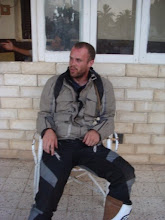
I am not an expert on Egypt, or on democratic emergence, or on Arab politics. So, I shall just share two things. First, this video is remarkable. Second, at the start of our Cairo to Cape Town trip, Sam and I kicked around Alexandria for a week. One of those days was spent with a taxi driver who spoke quite good English. We were trying to gain access to the port at Alexandria, and he was doing his best to free us from the bureaucratic net someone had dropped on us. It was a fool's errand, which at one point involved us in a taxi with him, a harpoon fisherman, a fellow who sold knock-off leather jackets, and one other fellow. I've posted the picture above. He was a man who was very proud to be Egyptian, but very keen to leave. I can still picture the road we were on when he told us "We are good people, but we live in a jail." Maybe, no more.


Wednesday, January 26, 2011

Susan Millard

There's much about party politics which I don't much like. Chief among these things are the often blind allegiance to a party's line; the partisan's susceptibility to the narcissism of small differences, leaving one to think that supporters of other parties are somehow fundamentally different and less deserving of favour; and the sometimes unquestioning commitment to leaders, who are usually just as fallible as the rest of us. That I am susceptible to all of these things is probably the chief reason I've not been more engaged in active politics, despite my professional and personal obsessions.
But all citizens are not made alike. The same forces that bring out the worst in some of us bring out the best in others. At its best, engagement in electoral politics brings you together with passionate, affable, committed people. These people take up politics not because they want power, or office, or privilege, but because they believe in their cause. Just as often they do it because it is fun. Such people make politics as addictive as its less desirable elements.
My only real experience in politics was when I decamped to Nova Scotia in 2005 to help a friend's father try to win the leadership of the NS Tory Party. I believed deeply in the candidate, whatever my reservations with the party. In the course of four months there, I had the great privilege of working with Susan Millard. Susan was, I gathered, a staple of Halifax politics. With good cheer, dependability, and the right balance of idealism and cynicism, she threw herself into our campaign. She personified what was good about politics. She was not, I estimate, given to its excesses. But she was taken by its virtues. It's people like Susan who make competitive politics work in a humane way.
On Monday, Susan was killed by a car while crossing a street in Halifax. The world was better with her, and is now worse without her. Politics is a little worse, too.

Parliamentary democracy in action

For the third time in as many months, a party leader has been taken down by their caucus. As the story in today's Globe makes clear, Ed Stelmach was staring down a battle with a popular minister and by extension with his caucus. He didn't have the support to fire that minister. He didn't, in short, have the support of his caucus. This is undoubtedly sad for someone who was, by most accounts, a decent and well-intentioned fellow. But it's how parliamentary democracy should work. Rather than being tossed by people who pay $10 to join a party, he was tossed by those elected by the people. This is one more step towards restoring a proper balance in leadership election and deselection. 


Friday, December 31, 2010

Tony Proudfoot

Perhaps courage is in short supply in our times. But the charge cannot be levelled against Tony Proudfoot. 

Proudfoot died yesterday from ALS, or Lou Gehrig's disease. Diagnosed in 2007, Proudfoot continued with his life at full pace. Most notably, he continued working as a radio broadcaster of Alouettes' football games, despite his impeded speech. And his foundation raised more than a half-million dollars for ALS research. 

I should also like to note that in the fall of 2006, when a gunman entered Dawson College and began shooting, Proudfoot left his office in that college (where he'd taught for many years) and administered first aid to a wounded student, despite the obvious and mortal danger. 

What courage, and what character. 

Monday, December 13, 2010

On altruism and organ donation

This weekend, the Toronto Star ran a remarkable story about a man who gave an anonymous liver transplant. You can read it here, along with an accompanying video.

By some metrics, this is an act of near pure altruism. This man gives something of himself to save someone else, without any material benefit. Ah, but you say, he receives the benefit of the admiration of his neighbours, his colleagues, and most certainly his wife, with whom he made the decision to give. But once reading the story, one gets the sense that he made the decision to give long before this admiration was due to him. Indeed, it was only after deciding to give and booking in for the procedure that he explained it to his colleagues and friends.

Perhaps he anticipated their praise and admiration, and this compelled him to give. But, there is an equally plausible story in which he felt some urge or impulse to do this act, quite apart from the expected praise. He felt a warm glow. This glow is merely prolonged by the admiration of others. There is, perhaps, a more purely altruistic mechanism at work here than a cynical account would suggest.

That's up for readers to decide, I guess. Either way, it's inspiring stuff.

Friday, December 10, 2010

On homelessness and the ethics of randomized controlled

The NYT has a very interesting article up on a randomized controlled trial for a homeless program in NY.

A social agency in New York runs a program which helps poor people with housing. The objective of the program is to prevent people from becoming homeless. It competes and works with several other programs to achieve this objective. However, they face a small problem: they have no idea if their program works. So, the organization has decided to randomly assign some people to enter their program, while denying others the right. 

You've read that correctly: they randomly chose some people by some lot or another to receive assistance, while others are denied it by virtue of the same draw. Dear reader, your initial reaction is probably that this is terribly cruel. This is certainly the reaction of many in NYC who are now opposing this trial. I'd like to argue that this is the most ethical course of action, in terms of both procedure or means, and ends. 

Two arguments recommend my position. First, while we should be concerned that social programs are just in their procedure -- think about the difference between feeding the poor respectfully and throwing them food from the back of a truck -- we should be most concerned that they are effective in their outcomes. Randomized controlled trials tell us more than any other method ever can whether a program has a negative or positive causal effect. This is no small matter. We waste billions of dollars every year on social programs that are meant to make peoples' lives better with virtually no systematic evidence that these programs work. If you believe that policy makers have an obligation to help the citizens who rely on them, then good intentions are not enough. We need to do our best to figure out what programs actually work and which do not. RCTs are the best way to do this. 

Second, this program suffers from scarcity, such that not everyone who applies can be accepted, despite their suitability for the program. So, we need some mechanism to decide in a fair manner who is admitted into the program and who is not. In the absence of randomization -- in which everyone has an equal chance -- some other criteria must be used. Now, a policy maker could select on need or suitability, or some other metric, but selecting on this eliminates the ability to figure out whether a program is effective, because you can't be sure that any differences in outcomes between those in the program and those out are a function of the program or the differences on which entrance into the program was granted. Alternately, a policy maker could grant access to someone they simply like more than others. This assuredly happens more often than we'd like to admit. I am sure there are other criteria, but the point remains that these other methods either limit our ability to measure outcomes, or they are arbitrary. In the worst case, they are both of these things. Contrast this with random assignment, in which everyone has equal chances of service. This is many scores more ethically defensible than some arbitrary selection mechanism. 

Experiments may seem unfair at first glance. After all, we don't like to think of humans as subjects in an experiment. But better subjects than participants in a series of arbitrarily administered and monitored programs bound for continued failure. That's more cruel than a coin flip. 

Tuesday, December 07, 2010

One more thought on BC

Given that the leaders of both major parties in BC have been pushed out by factions in their caucus, it appears that elected members are more powerful there than elsewhere. If this is true, how much of it is because of fixed election dates? In the absence of these set elections, one can imagine party leaders holding more sway over risk averse caucus members who fear a snap election under an interim or a new leader. But now, with the election date set, members know how much time they have to elect a new leader if they push out the current head. This is speculation at best, but the hypothesis has some face validity, I think.

Monday, December 06, 2010

A win for caucus authority?

Carole James has been made to resign as leader of the New Democratic Party of British Columbia. (The Globe has a quick story here).

This is the short story. James has faced serious dissent in her caucus, such that 13 members (out of a caucus of 35), have publicly signalled their wish for her to go. However, two weeks ago she won the support of her party's provincial council, which is some group of its elected and appointed riding executives with some union members thrown in for good measure, I am sure. I suspect Royce Koop knows for certain. Anyways, armed with this endorsement of party members, James' leadership looked secured. However, she met with just one of the 13 dissenters since then. The pressure on her increased when Jenny Kwan, a member of her caucus, released a long statement asking her to resign.

This is not a perfect battle between the authority of some unelected party members and elected members of the legislature, if only because the dissenters among the latter don't represent a majority in their caucus. But, it's close enough for the purposes of noting that a caucus has just turfed its leader for for the second time in BC politics in less than a year. This is a victory for those who think that elected politicians should have more say over who leads them than party members. I can preach it round or preach it straight, but for now it's enough to note that this is good evidence that the supremacy of parliamentary leaders in Canadian politics is not absolute. This is a very good thing.

Thursday, November 11, 2010

Wednesday, October 27, 2010

But what's his position on the Gravy Train?

Rob Ford gives an interview with CBC while running a football practice. This is truly amazing. Listen here.


Monday, October 25, 2010

Jack Layton proposes to subsidize polluters

Herein Jack Layton proposes to subsidize big polluters. Namely, all of us who heat our homes. 

I don't even really have the energy to complain about this, as it's so obviously wrong-headed. I'll leave it to Worthwhile Canadian Initiative. 

Suffice it to say that it just reflects how central and serious the NDP's problems are. They prefer policies which will disproportionately benefit the rich while trying to appear to help the poor.  It's too bad, really.    

H/T: To Calgary Grit, who notes that this reflect the NDP's "always consistent climate change policy."

Saturday, October 23, 2010

Russell Williams, Muslim Cartoons, and a question for the Star

Last week, the Toronto Star pasted a picture of Russell Williams, in female underwear, staring blankly back at readers. It was a picture as haunting as off-putting. The Star justifies its decision here. Whether you believe their arguments or not, it should at least be noted that they are hypocritical. 

In 2005, protests and violence flared up across the world in response to a series of 12 cartoons published in a Danish newspaper. As a result of their publication, embassies were burned, journalists and politicians had their lives threatened, the Danish economy was punished by boycotts of their exports, and more than 100 people were killed by police during protests in Muslim countries. This was no small matter. 

The Toronto Star was, like other major papers in Canada, unwilling to publish the cartoons that generated this controversy. This is the Star's prerogative, and whether it reflects cowardice or not is for that good paper's editors to consider. Readers can draw their own judgements. But it's clear that it's not an unshakeable principle of the Toronto Star to choose "the harder way for the right reasons."

Friday, July 09, 2010

Bob Probert

Bob Probert died this weekend. As always, this is a shame for family and friends. It's also a shame for hockey. All of his problems aside, I think Probert was the best enforcer of his generation. First, he was universally feared. But, more importantly, he was also productive offensively. Consider his numbers against four other tough guys. Probert was good for 384 points in 935 NHL games. That's .41 points per game. Tie Domi? 0.24. Joey Kocur? .20. Stu Grimson? .05. George Laraque? .22. Marty McSorley, who played among the greatest offences in the game? .37.

An enforcer who can also put the puck in the net creates havoc for a defense. Is there another pure enforcer with numbers like Probert's? In fact, can you think of a single one who's had three 20 goal seasons? McGinnis? Bodet? Gimme your answers. 

Friday, June 18, 2010

Air Canada smashes priceless lute*

I've had my share of baggage trouble of late, including a bag lost for a month, and a bottle of wine stolen from my luggage. But, if I was travelling with the equivalent of a suitcase full of $300,000, you can be sure I'd be taking up Air Canada on it's offer to buy the suitcase a seat and to carry it on board. 

The story is here. 

*Despite the headline, the lute does in fact have a price. 


Wednesday, June 16, 2010

Ignatieff's new foreign policy

Michael Ignatieff has released a new policy paper outlining his party's foreign policy. Among it's recommendations is keeping Canadian troops in Afghanistan after 2011, though in a training capacity. The merits or faults of this aside, it's an immensely important policy. 

So, what happens when Canada's largest paper writes an editorial about this? First, it buries this proposal in the last paragraph. And then it tells us that such details matter less than how bold the paper is. Really? What matters more than what a country does is how boldly and loudly it proclaims what it wants to do? Isn't that sort of the problem with our foreign policy in the first place? 


Thursday, June 03, 2010

War deaths increase local Conservative support

Daniel Rubenson and I presented the latest version of our paper on war deaths and Conservative candidate support. The basic story is that in 2008, Conservative candidates did better in constituencies that had experienced a war death. The abstract is here: 

War comes with terrible costs both in terms of money and lives. Do voters punish incumbents for theses costs? Much of the existing literature on the effects of war deaths on public opinion toward incumbents and their war efforts suggests that the answer is yes. We test this proposition on data from a non-US case: Canada's war in Afghanistan. We estimate models of the effect of local war deaths on government candidate support using both individual level panel data from the 2006 and 2008 Canadian Election Study and aggregate district level data. In none of our models do we find support for the conclusion that war deaths decrease support for candidates of the governing party. Instead we find strong evidence at both the individual and district levels that support for Conservative Party candidates is higher in districts that experienced war deaths.

The paper is here. And a nice article about it in the Toronto Star is here!  


Wednesday, May 26, 2010

Question Period and Television

Tasha Kheirridin has a nice piece in the Post today about saving Question Period. She makes the common argument that the introduction of television is a principal cause of the decline of Question Period. I think the essence of this article is that the demands of television make for shorter, more sensational questions. The second order effects, I imagine, is that this type of debate and coverage trickles all the way down into other political reporting. 

But is this true? However plausible, I've yet to see convincing evidence that the introduction of TV actually changed QP. Moreover, I can imagine equally plausible reasons why QP would have featured poor debate even prior to the introduction of TV. It seems like a great dissertation topic, and one that could pretty convincingly be demonstrated through some modelling and textual analysis. It would be helpful for our own debate over the topic, as well.